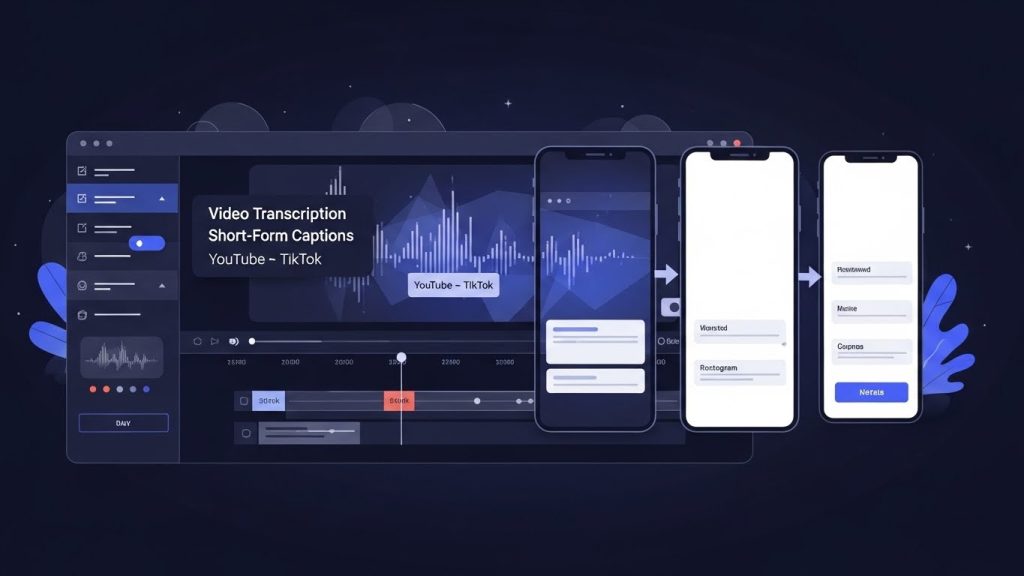


In today’s fast-paced digital age, transcription services have become a cornerstone for industries ranging from media and education to legal and healthcare. Historically, transcription was a labor-intensive process requiring skilled professionals to listen and manually convert spoken words into text. While effective, this method was time-consuming, prone to human error, and limited in scalability. Enter artificial intelligence (AI) – a game-changing technology that is transforming transcription services as we know them.
Speed: Lightning-Fast Transcriptions
One of the most significant advantages of AI-powered transcription is its unparalleled speed. Traditional transcriptionists can take several hours to transcribe a single hour of audio, depending on the complexity of the content. AI transcription platforms, on the other hand, can process the same audio within minutes.
AI achieves this through advanced speech recognition algorithms capable of analyzing audio data in real time. This rapid turnaround is particularly beneficial for industries where time is of the essence, such as journalism and live event coverage. With AI, businesses can meet tight deadlines and ensure timely delivery of content.
Accuracy: Reducing Human Error
Accuracy is paramount in transcription, especially in fields like legal proceedings or medical documentation, where errors can have serious consequences. While human transcriptionists can achieve high levels of accuracy, they are not immune to fatigue, distractions, or misinterpretations.
AI transcription platforms leverage machine learning models trained on vast datasets of diverse accents, dialects, and languages. This training allows AI systems to achieve remarkable levels of accuracy, often rivaling or even surpassing human performance. Additionally, many platforms offer features like speaker identification and context-based correction, further enhancing precision.
Scalability: Meeting Growing Demands
Manual transcription services face inherent limitations in scalability. Hiring, training, and managing a team of skilled transcriptionists can be costly and time-consuming. This bottleneck becomes even more pronounced when dealing with large volumes of audio or video content.
AI transcription eliminates these challenges by offering a scalable solution. Whether a business needs to transcribe a single interview or thousands of hours of video content, AI can handle the workload seamlessly. This scalability makes AI transcription an ideal choice for enterprises, educational institutions, and media companies looking to streamline their operations.
Additional Benefits
Beyond speed, accuracy, and scalability, AI transcription platforms offer several other advantages:
- Cost-Effectiveness: With reduced reliance on manual labor, AI transcription services are often more affordable, making them accessible to businesses of all sizes.
- Multilingual Capabilities: AI can process audio in multiple languages and even handle code-switching (switching between languages in the same conversation).
- Integration with Other Tools: Modern AI transcription platforms can integrate with video editing software, content management systems, and translation tools, creating a seamless workflow.
- Real-Time Transcription: Some AI systems provide real-time transcription, making them invaluable for live events, webinars, and conferences.
Overcoming Challenges
While AI transcription has made significant strides, it is not without its challenges. Background noise, overlapping speech, and heavy accents can still pose difficulties for AI systems. However, continuous advancements in machine learning and audio processing are addressing these issues, further improving performance over time.
Conclusion
AI is undeniably revolutionizing the transcription industry, offering unmatched speed, accuracy, and scalability. By automating repetitive tasks, it frees up human professionals to focus on higher-value activities, such as editing and analysis. As technology continues to evolve, the possibilities for AI transcription are limitless, promising a future where converting spoken words into text is faster, more accurate, and more accessible than ever before.
Businesses and organizations that embrace AI-powered transcription will undoubtedly gain a competitive edge, enabling them to keep pace in an increasingly digital and data-driven world.