Trulyscribe

Author name: Izaj

What Is AI Transcription & How It Works: A Beginner’s Guide (2026)
Uncategorized

What Is AI Transcription & How It Works: A Beginner’s Guide (2026)

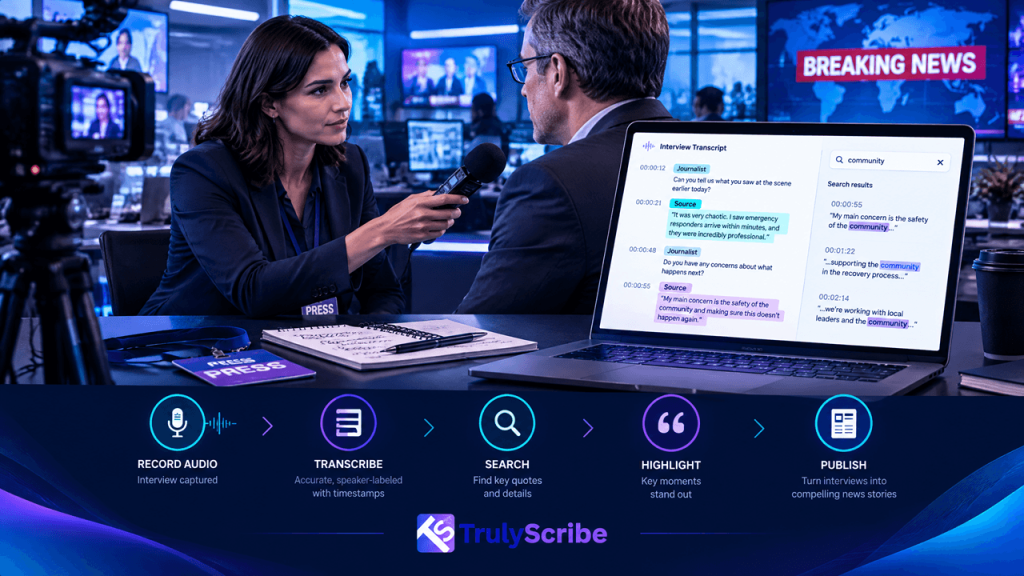
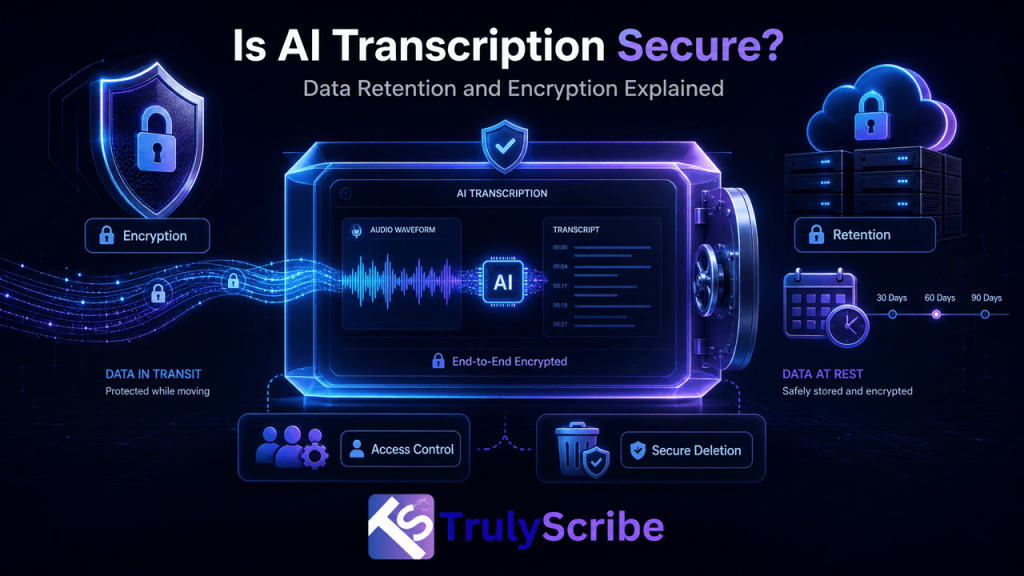
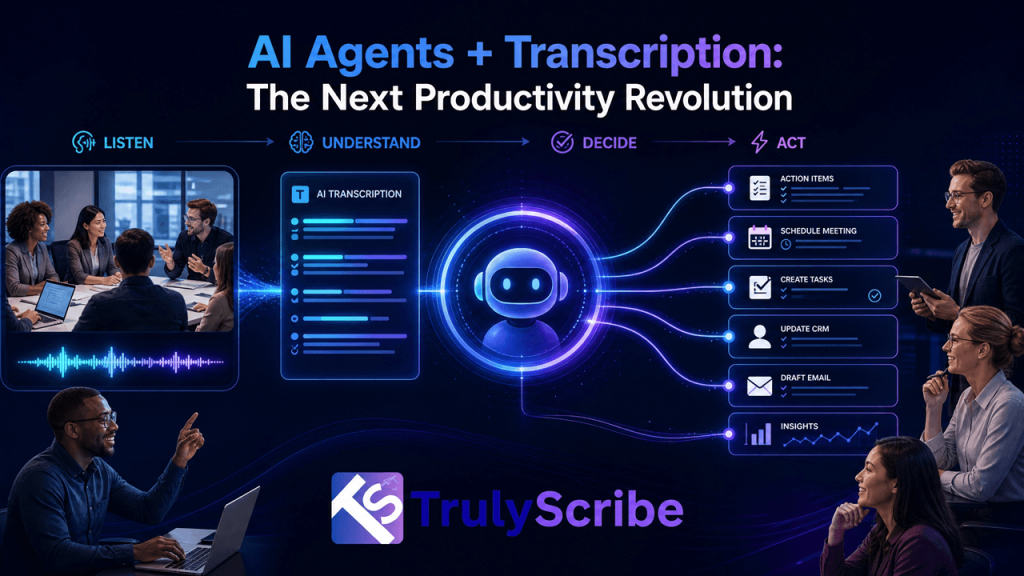
Audio and video content are everywhere—podcasts, meetings, interviews, webinars, YouTube videos, and online courses. But turning spoken words into written text manually is time-consuming and expensive. That’s where AI transcription comes in. In this beginner’s guide, we’ll explain what AI transcription is, how it works, and why creators and businesses are increasingly relying on it to save time, reduce costs, and scale content effortlessly. What Is AI Transcription? AI transcription is the process of converting spoken language from audio or video files into written text using artificial intelligence instead of human transcribers. Also known as speech-to-text or automatic transcription, AI transcription tools listen to spoken words, recognize speech patterns, and generate text in real time or within minutes. Unlike manual transcription, which can take hours or even days, AI transcription delivers fast, scalable, and cost-effective results. Modern tools like TrulyScribe can transcribe long recordings in just a few minutes, making transcription accessible to everyone—from solo creators to large teams. How Does AI Transcription Work? At first glance, AI transcription may feel almost magical—but behind the scenes, it follows a clear process. Here’s how it works step by step. Step 1: Upload or Record Audio You start by uploading an audio or video file (such as MP3, MP4, WAV, or MOV) or by recording audio directly within the transcription platform. This could be a meeting recording, podcast episode, interview, or lecture. Step 2: Automatic Speech Recognition (ASR) The AI uses Automatic Speech Recognition (ASR) to analyze the audio. It breaks down sound waves, identifies speech patterns, and converts spoken words into text. Step 3: Language Models Improve Accuracy Advanced language models help the AI understand: This is what separates modern AI transcription software from older, error-prone systems. Step 4: Transcript Is Generated Within seconds or minutes, a complete transcript is produced. Most AI transcription tools allow you to: With AI tools like TrulyScribe, the entire process—from upload to editable transcript—happens seamlessly. AI Transcription vs Manual Transcription Many people still wonder whether AI transcription can replace manual transcription. Here’s a simple comparison. Feature AI Transcription Manual Transcription Speed Minutes Hours or days Cost Affordable Expensive Scalability High Limited Accuracy 85–95%+ Up to 99% Turnaround Instant Slow Manual transcription still has a place in highly sensitive or legal-grade scenarios, but for most everyday use cases, AI transcription offers the best balance of speed, accuracy, and cost. What Types of Content Can AI Transcription Handle? AI transcription software is extremely versatile and can be used across many formats, including: If content is spoken, AI transcription can convert it into text. Who Should Use AI Transcription? AI transcription is not limited to one industry. It’s widely used by: If you regularly work with audio or video, AI transcription can save you hours every week. Benefits of Using AI Transcription Software Here’s why AI transcription has become essential in modern workflows: With AI transcription, spoken content becomes a powerful, reusable asset. How Accurate Is AI Transcription? AI transcription accuracy typically ranges from 85% to 95% or higher, depending on factors such as: Clear audio recordings produce the best results. Modern AI transcription tools continuously improve accuracy by learning from vast language datasets and real-world usage. Is AI Transcription Secure? Security is a common concern—especially for businesses. Reputable AI transcription platforms prioritize: When choosing an AI transcription tool, always look for clear security and data-handling practices. How to Get Started With AI Transcription Getting started is simple: You can experience this entire workflow by trying TrulyScribe, which makes AI transcription fast, simple, and beginner-friendly. 👉 Try AI transcription for free with TrulyScribe Final Thoughts AI transcription has transformed how we work with audio and video content. What once took hours now takes minutes, enabling creators and businesses to work faster, smarter, and more efficiently.If you’re new to AI transcription, there’s never been a better time to start. Tools like TrulyScribe make it easy to turn voice into text—and text into value. Frequently Asked Questions About AI Transcription

ai-transcription-creator-seo
AI Transcription

From Voice to Visibility: How AI Transcription Is Powering Creator SEO in 2026

Why Visibility Matters More Than Content Creation in 2026 In 2026, content creation is no longer just about recording great videos or publishing engaging podcasts. Visibility is the real challenge. With millions of creators competing for attention across YouTube, podcasts, blogs, and social platforms, discoverability has become the defining factor of growth. This is where AI transcription for SEO has emerged as a game-changing strategy. Creators who once relied solely on platform algorithms are now turning spoken content into searchable, indexable assets—unlocking long-term organic traffic, better rankings, and platform-independent growth. Why Creator SEO Looks Different in 2026 Search behavior has changed. Audiences now discover creators through: Yet, audio and video content alone cannot be fully understood by search engines. Search engines still rely heavily on text. That’s why transcription for content creators has become essential—not optional. What Is AI Transcription for SEO? AI transcription converts spoken audio or video into accurate text using speech-to-text technology.When optimized correctly, these transcripts become powerful SEO assets that help search engines: In short, transcription transforms voice into visibility. How AI Transcription Improves SEO for Content Creators 1. Turns Audio and Video into Indexable Content Search engines cannot “watch” a video or “listen” to a podcast—but they can crawl text. By adding video transcription SEO and podcast transcription for SEO, creators give Google exactly what it needs to rank their content. This answers a common question creators ask: Does transcription help YouTube SEO? Yes—especially when transcripts are published on web pages, blogs, or video descriptions. 2. Boosts Keyword Coverage Naturally Spoken language is naturally rich in keywords, variations, and semantic phrases. AI-generated transcripts help you rank for: This is one of the most effective ways to increase organic traffic using transcripts—without keyword stuffing. 3. Powers Creator SEO Beyond Platforms Creators who rely only on YouTube, TikTok, or Spotify face constant algorithm risk. By using audio to text for SEO, you can: This approach supports platform-independent creator growth, one of the biggest creator trends of 2026. From Transcripts to Traffic: Real Creator Use Cases YouTube Transcription for SEO Creators use transcripts to: How to rank videos on Google using transcripts: Publish your transcript on a blog page with optimized headings, internal links, and FAQs. Podcast Transcription for SEO Podcasters convert episodes into: This answers another high-intent query: How do creators use transcription for SEO? By turning conversations into evergreen written content. Content Repurposing with Transcription One transcript can become: This makes content repurposing with transcription one of the most efficient creator workflows in 2026. Best AI Transcription Tool for Creators in 2026 Not all transcription tools are built for creators. Creators need: This is where AI transcription tools like TrulyScribe stand out—designed specifically to help creators convert audio to text for SEO without technical complexity. How Transcripts Increase Organic Traffic Over Time Here’s what happens when creators consistently publish transcripts: This makes transcription a long-term SEO investment, not just a productivity hack. The Future of Creator SEO Starts with Voice In 2026, creators don’t just publish content—they build searchable content ecosystems. If your content includes: Then AI transcription for creators is the fastest path from spoken words to sustainable visibility. Final Thoughts Creators who win in 2026 will be the ones who: AI transcription is no longer a backend task—it’s the foundation of modern creator SEO. If you want your content to be found, ranked, and remembered, it starts with transcription. Turn your voice into traffic.Signup TrulyScribe and start using AI transcription to make every piece of content searchable. FAQs: AI Transcription & Creator SEO

video-to-blog-ai-transcription-guide
Uncategorized

Step-by-Step Guide to Turning Your Video into a Blog Post (Using AI Transcription)

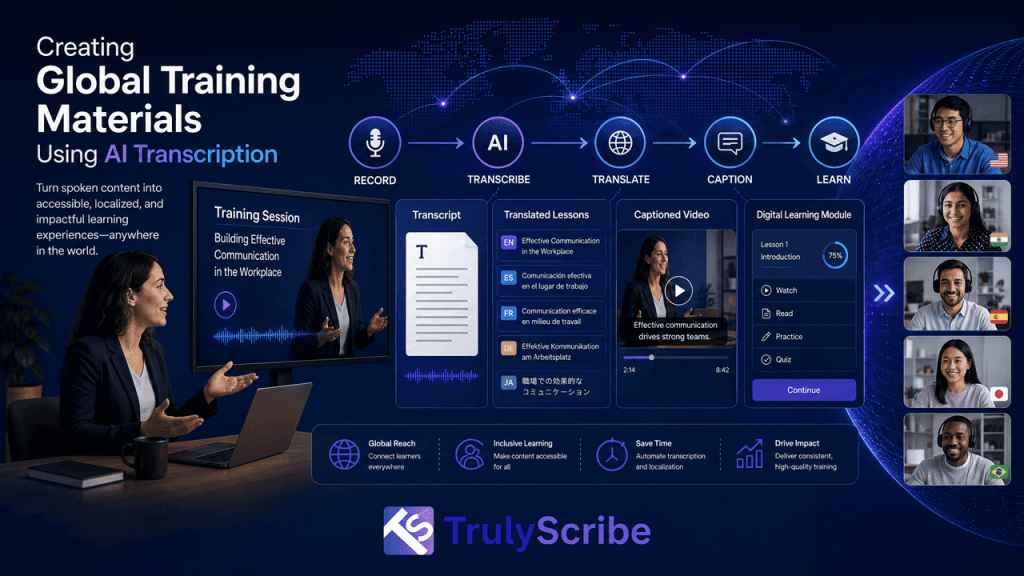
Why Video Transcription Is the Key to Turning Videos into High-Value Blog Content Video has become the most powerful content format across industries—from YouTube and podcasts to e-learning, corporate communications, and OTT platforms. But while video captures attention, text content still drives discoverability, SEO, and long-term value. This is where AI transcription becomes a game-changer. Instead of letting valuable video content live and die on a single platform, creators and organizations are increasingly using video transcription services to turn videos into high-performing blog posts, articles, and localized written assets. This approach saves time, improves accessibility, and unlocks new audiences across regions and languages. In this step-by-step guide, we’ll walk through how to turn a video into a blog post using AI transcription, while aligning the process with professional subtitling, dubbing, voice-over, localization, and audio description workflows. Why Turn Videos into Blog Posts? Before diving into the process, it’s important to understand why this strategy works so well—especially for media, marketing, and localization teams. Key benefits of converting video to blog content: For industries like media & entertainment, e-learning, broadcasting, corporate training, and digital marketing, video-to-text conversion is no longer optional—it’s a strategic advantage. Step 1: Choose the Right Video for Transcription Not every video makes a good blog post. The best candidates are videos that deliver structured, informational, or narrative value. Ideal video types include: Localization project managers and post-production teams often prioritize videos that can later be adapted into subtitles, dubbed versions, or audio descriptions. Step 2: Transcribe the Video Using AI Transcription Once you’ve selected the video, the next step is video transcription—converting spoken audio into written text. Why use AI transcription? AI transcription tools dramatically reduce turnaround time while maintaining high accuracy. They are especially effective for: Modern video transcription services can handle accents, industry terminology, and multiple speakers—making them suitable for professional environments. Best practice: Use AI transcription as the first draft, then review or refine the transcript for clarity, tone, and structure. Step 3: Clean and Structure the Transcript Raw transcripts are rarely blog-ready. Spoken language doesn’t always translate smoothly into written content, especially for SEO and readability. What to clean up: What to preserve: This step is critical for subtitling and captioning specialists, as a clean transcript also becomes the base file for captions, subtitles, and dubbing scripts. Step 4: Create a Blog Structure from the Transcript Now it’s time to turn the transcript into a proper blog post. Step-by-step video to blog content workflow: This process transforms spoken content into a reader-friendly article without losing the original message. For SEO and accessibility, clear structure is essential. Step 5: Optimize the Blog for SEO Using the Transcript One of the biggest advantages of using AI transcription is SEO. Search engines cannot “watch” videos—but they can index text. How transcripts improve SEO: SEO optimization tips: For digital marketing teams, this step directly impacts organic traffic and lead generation. Step 6: Adapt the Content for Localization & Multilingual Use Once the blog is finalized in the source language, it becomes a powerful asset for video localization services. How transcription supports localization: For regions like Europe, Latin America, Southeast Asia, the Middle East, and Africa, this approach supports scalable multilingual publishing. Dubbing and voice-over studios also use transcripts as the foundation for script adaptation and timing alignment. Step 7: Use the Blog for Subtitling, Dubbing & Accessibility A high-quality transcript doesn’t stop at blogs—it feeds multiple downstream workflows. One transcript can power: This is especially important for: By centralizing transcription early, teams reduce duplication and improve consistency. Real-World Scenario: One Video, Multiple Assets Imagine a corporate webinar recorded in English. Using AI transcription: With a single recording, the organization creates multiple content assets across formats and regions—efficiently and cost-effectively. Common Mistakes to Avoid Even with AI transcription, there are pitfalls to watch out for. Avoid these common issues: Professional transcription and subtitling workflows help avoid these problems—especially for high-visibility or regulated content. Who Benefits Most from This Workflow? This approach is especially valuable for: Industries Roles Conclusion: AI Transcription Turns Video into a Scalable Content Engine Turning videos into blog posts isn’t just a productivity trick—it’s a strategic move that amplifies reach, improves accessibility, and supports global content growth. With AI transcription, you can: Ready to transform your video content? We provide professional AI-powered transcription tailored for creators, agencies, and enterprises. 👉 Contact us to turn your videos into powerful, multi-format, globally accessible content. Frequently Asked Questions (FAQ)

Best AI Transcription Tools for Content Creators in 2026
AI Transcription Tools, Accessibility & Localization, AI for Video, Content Creation Tools, Media Localization, Subtitling & Captioning

Best Tools for Content Creators in 2026 — Including AI for Transcripts & Captions

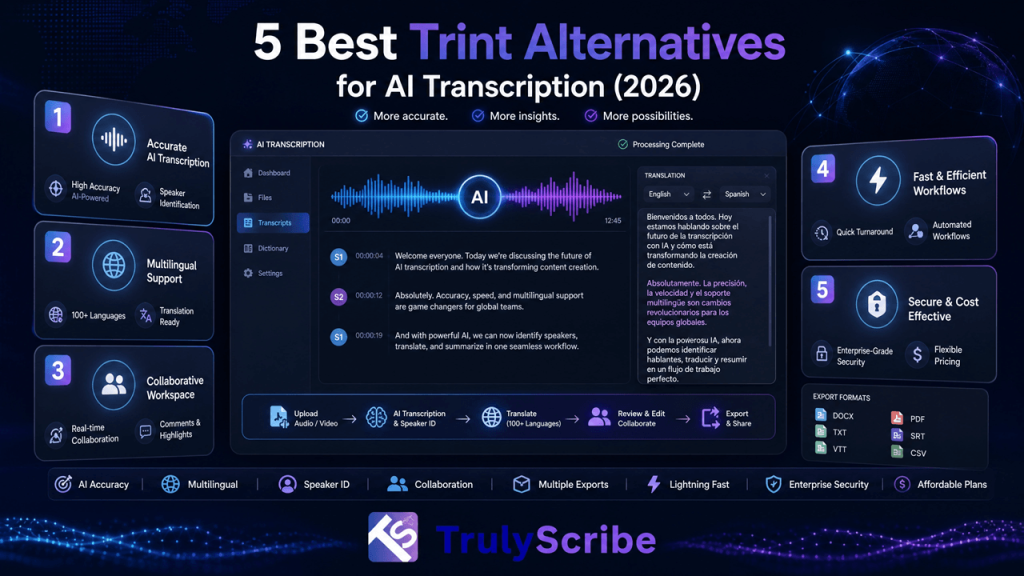
Content creation in 2026 looks very different from just a few years ago. Creators are producing more video, across more platforms, for more regions—and with far less time to spare. Whether you’re a YouTuber, TikTok creator, video editor, or media localization manager, one thing is clear: AI transcription tools and captioning software are no longer optional. From short-form video captions to multilingual subtitling and accessibility compliance, transcription and captioning tools now sit at the core of modern content workflows. In this guide, we explore the best AI tools for content creators in 2026, with a strong focus on video transcription software, AI captioning tools, and subtitling solutions—including how TrulyScribe compares with other popular platforms. Why AI Transcription Tools Are Essential for Creators in 2026 Video continues to dominate digital platforms. YouTube, TikTok, Instagram Reels, OTT platforms, and corporate video channels are all competing for attention—often in sound-off environments. This shift has made AI transcription tools critical for creators and organizations across industries such as: What creators need today: Creators and teams that rely solely on manual workflows are falling behind in speed, reach, and accessibility. What to Look for in AI Captioning & Transcription Tools Before comparing platforms, it’s important to understand what actually matters when choosing a tool in 2026. Key evaluation criteria: For professional users—such as subtitling specialists, dubbing producers, and media localization managers—these factors determine whether a tool fits into real production workflows. Best AI Transcription Tools for Content Creators in 2026 Below is a practical overview of how today’s leading tools are used, followed by where TrulyScribe fits within the ecosystem. 1. TrulyScribe – Built for Professional Transcription & Subtitling Workflows TrulyScribe is designed for creators, agencies, and enterprises that need reliable video transcription and captioning at scale, without sacrificing quality. Strengths: Best suited for: TrulyScribe stands out where transcription needs to move beyond “auto-captions” and into production-ready subtitling. 2. Generic Creator-Focused Captioning Tools Many popular tools focus on speed and ease for individual creators. Strengths: Limitations: These tools work well for solo creators but often fall short for agencies, broadcasters, or global brands. 3. Enterprise Transcription & Subtitle Platforms Enterprise solutions focus on scale and compliance. Strengths: Limitations: This is where hybrid platforms—like TrulyScribe—bridge the gap between creator agility and enterprise reliability. Best Use Cases: Matching Tools to Creator Needs Different creators and teams use AI transcription tools differently. Content Creators & Influencers Video Editors & Motion Designers Localization & Media Teams Marketing & Agency Teams AI Transcription for TikTok, Reels & Shorts: Best Practices Short-form platforms demand a different transcription approach. Best transcription format for short-form social videos: Subtitle timing tips for vertical short-form videos: AI transcription tools that support these practices deliver better engagement and viewer retention. How Captions Improve Engagement on Short Videos Captions aren’t just about accessibility—they’re about performance. Studies consistently show that captioned videos: For performance marketing agencies and social media managers, captions directly impact ROI. Multilingual Subtitles & Localization: The Next Growth Lever In 2026, content goes global instantly. Creators and brands targeting: …are increasingly relying on multilingual subtitles for short-form video content. AI transcription becomes the foundation for: Tools that support professional localization workflows—rather than just auto-translate—deliver long-term value. Transcription Workflow for Repurposing Long Videos A scalable workflow used by top creators and media teams: This workflow saves time, reduces costs, and improves content consistency. Choosing the Right Tool in 2026 When comparing AI transcription tools for content creators, the best choice depends on where you’re headed: TrulyScribe is positioned for creators and teams who want to grow beyond basic captions and build professional, accessible, and globally ready content pipelines. Final Thoughts: AI Tools Are the New Creative Infrastructure In 2026, the most successful creators aren’t just great storytellers—they’re efficient operators. AI transcription, captioning, and subtitling tools are no longer add-ons; they’re core infrastructure. If your content strategy includes: …then choosing the right transcription platform matters. Ready to elevate your content workflow? We provide professional transcription, subtitling, dubbing, voice-over, video localization, and audio description services tailored for creators, agencies, and global media teams. 👉 Contact us today to build a scalable, future-ready content pipeline. Frequently Asked Questions (FAQs)

Transcription Tips for Short-Form Video
Video Transcription, Accessibility & Compliance, AI & Automation in Media, AI Transcription Tools, Media Localization & Accessibility, Subtitling & Captioning, Transcription, Video Localization

From YouTube to TikTok: Transcription Tips for Short-Form Video Success

Why Video Transcription Is Essential for Short-Form Video Success Long-form video is no longer the end of the content journey—it’s just the beginning. Today’s most successful creators, media companies, and brands are repurposing YouTube videos into short, high-impact clips for TikTok, Instagram Reels, and YouTube Shorts. At the heart of this transformation lies one critical enabler: video transcription. Whether you’re a content creator, a localization project manager, or a post-production supervisor, transcription is the foundation for effective short-form video captions, accessibility, and global reach. In this guide, we’ll explore how to move seamlessly from YouTube to TikTok using smart transcription workflows, AI-powered subtitling, and platform-specific best practices. Why Video Transcription Is the Backbone of Short-Form Video Short-form video platforms are built for speed, silent viewing, and global audiences. According to multiple industry studies, over 80% of social media videos are watched without sound, and videos with captions consistently outperform those without. This makes video transcription essential—not optional. Key benefits of transcription for short-form video: For industries like media & entertainment, e-learning, broadcasting, and corporate communications, transcription also supports compliance, scalability, and faster turnaround times. From YouTube to TikTok: Why Transcription Comes First Repurposing long-form YouTube videos into short clips isn’t just about trimming footage. TikTok, Reels, and Shorts demand a different storytelling rhythm—faster hooks, tighter captions, and visual-first communication. This is where YouTube to TikTok transcription plays a crucial role. How to transcribe YouTube videos for TikTok captions Instead of manually rewatching hours of footage, professional teams and creators follow this workflow: This approach allows video editors, social media managers, and localization teams to work faster and more accurately—especially when handling large content volumes. Best Transcription Format for Short-Form Social Videos Not all transcripts are created equal. A verbatim transcript that works for YouTube may not work for TikTok. Best transcription format for short-form social videos: For subtitling specialists and dubbing producers, this clean transcript also becomes the base file for: Subtitle Timing Tips for Vertical Short-Form Videos Timing matters more than text volume on short-form platforms. Captions that lag—or overload the screen—can kill engagement. Subtitle timing tips for vertical short-form videos: For video production studios and post-production teams, these subtitling standards ensure platform compliance while maintaining creative integrity. How Captions Improve Engagement on Short Videos Captions don’t just improve accessibility—they drive performance. How captions improve engagement on short videos: For digital marketing and performance marketing agencies, captioned videos often result in: This is why short-form video captions are now a non-negotiable part of social media strategy. AI Transcription for TikTok and Instagram Reels: What to Know AI has transformed transcription speed and scalability. AI transcription for TikTok and Instagram Reels allows teams to process large content libraries quickly—but quality control remains critical. Where AI subtitle generation works best: Where professional review is essential: Localization project managers and media localization managers often combine AI with human review to balance speed, accuracy, and cultural nuance. Multilingual Subtitles for Short-Form Video Content Short-form video is global by default. A TikTok posted today can reach audiences in Europe, Asia, the Middle East, and Latin America within hours. Why multilingual subtitles matter: For video localization services, transcription is the starting point for: This is especially critical in multilingual and localization-heavy regions such as Latin America, Western & Eastern Europe, Africa, and Southeast Asia. Transcription Workflow for Repurposing Long Videos A scalable transcription workflow benefits creators and enterprises alike. A proven transcription workflow for repurposing long videos: This workflow is widely used across: Real-World Scenario: One Video, Multiple Markets Imagine a YouTube interview published by a media brand in the United States. Using transcription: With one source video, the brand reaches audiences in North America, Latin America, Europe, and the Middle East—without re-recording or re-editing from scratch. That’s the power of transcription-led content strategy. Conclusion: Transcription Is the Smartest Way to Win Short-Form Video Short-form video success isn’t just about trends or algorithms—it’s about clarity, accessibility, and speed. Video transcription enables creators, marketers, and media teams to repurpose content efficiently, improve engagement, and scale globally. Whether you’re producing TikToks, managing localization projects, or delivering accessible content, transcription is the foundation that makes everything else possible. Ready to elevate your short-form video strategy? Our team provides professional transcription, subtitling, dubbing, voice-over, video localization, and audio description services tailored for creators, media companies, and global brands. 👉 Contact us today to transform your long-form content into high-performing, globally accessible short-form videos. Frequently Asked Questions (FAQs)

Audio-to-Text-Online
AI Transcription, Audio to Text, Media & Localization Workflows, Productivity & Automation, Speech-to-Text Technology

Audio to Text Online: How AI Transcription Saves 10+ Hours Every Week

Why Audio-to-Text Is a Game Changer for Modern Teams Audio content is everywhere—meetings, podcasts, interviews, training sessions, webinars, voiceovers, and video productions. But turning that audio into usable, searchable, and editable text has traditionally been one of the most time-consuming tasks for media and content teams. This is exactly why audio to text online solutions powered by AI have become essential. Instead of spending hours manually transcribing recordings, professionals today rely on AI transcription software to convert speech into text in minutes—not days. For teams working in dubbing, subtitling, localization, and media production, this shift isn’t just convenient—it’s transformative. In this guide, we’ll explore how automatic audio transcription helps save 10+ hours every week, where those time savings really come from, and how tools like TrulyScribe fit seamlessly into professional transcription and localization workflows. What Is Audio to Text Online? Audio to text online refers to cloud-based tools that convert spoken audio into written text using speech-to-text AI. These tools work directly in the browser or via web platforms—no complex installations required. Modern AI-driven platforms can transcribe: Unlike traditional professional transcription services, which rely heavily on manual labor, AI transcription delivers speed, scalability, and cost efficiency. How Does AI Audio to Text Save Time? One of the most common questions professionals ask is:How does AI audio to text save time? The answer lies in automation and parallel processing. Traditional manual transcription: AI transcription workflow: By removing repetitive manual steps, AI transcription tools like TrulyScribe easily save 10+ hours per week for media, localization, and content teams. Key Benefits of AI Transcription for Media Teams The benefits of AI transcription for media teams go far beyond speed. 1. Faster Turnaround Times AI transcription enables near-instant text output, allowing teams to: 2. Scalable Audio-to-Text Workflows Whether you’re processing: AI transcription scales effortlessly—something manual workflows struggle with. 3. Cost Efficiency Manual transcription costs rise linearly with volume. AI transcription software reduces cost per minute dramatically, especially for recurring content. 4. Consistency Across Projects AI systems maintain consistent formatting, terminology, and structure—critical for localization, subtitling, and accessibility workflows. Audio to Text Workflow for Dubbing and Subtitling In dubbing and subtitling, transcription is the foundation. A typical audio to text workflow for dubbing and subtitling looks like this: Using automatic audio transcription eliminates the biggest bottleneck at step one—allowing teams to move faster without sacrificing accuracy. How Accurate Is AI Audio Transcription? Another common concern is accuracy. How accurate is AI audio transcription? Today’s AI transcription engines achieve high accuracy levels—especially for: Platforms like TrulyScribe are built for professional use cases, meaning transcripts are suitable for: When needed, AI transcripts can be quickly reviewed or lightly edited—still saving significant time compared to full manual transcription. Can AI Transcription Replace Manual Transcription? A question many agencies ask is:Can AI transcription replace manual transcription? The realistic answer: AI replaces 80–90% of the effort. For most workflows: This hybrid approach delivers the best balance of speed, quality, and cost—especially for professional transcription services operating at scale. Best Audio to Text Online Tool for Professionals When evaluating the best audio to text online tool for professionals, decision-makers should look beyond basic features. What professionals actually need: TrulyScribe is designed specifically for professional environments—supporting media teams, localization agencies, dubbing studios, and enterprise users who need reliability and scale. Audio to Text Online for Localization & Global Content For localization teams, transcription is the gateway to multilingual content. Once audio is converted to text: AI transcription dramatically reduces turnaround time for global releases—especially for OTT platforms, e-learning providers, and corporate communications teams distributing content across regions. How to Convert Audio to Text Online Securely Security matters—especially for enterprise and media clients. How to convert audio to text online securely? Look for platforms that offer: Professional AI transcription platforms like TrulyScribe are built with enterprise-grade security in mind, making them suitable for corporate, legal, and media use cases. H2 Real-World Scenario: Saving 10+ Hours Every Week Imagine a localization agency handling: Manual transcription = ~35–40 hours weeklyAI transcription = under 2 hours of processing + light review That’s 30+ hours saved every week—time that teams can reinvest in higher-value tasks like quality control, localization, or client delivery. Why TrulyScribe for Audio to Text Online? TrulyScribe is an AI-powered transcription platform built for professionals who work with audio every day. With TrulyScribe, you can: Whether you’re a dubbing studio, media company, localization agency, or content team—TrulyScribe helps you work faster without compromising quality. 👉 Start using TrulyScribe to turn audio into text—and reclaim 10+ hours every week. Final Takeaway Audio to text online is no longer a productivity upgrade—it’s a competitive advantage.With AI transcription tools like TrulyScribe, teams across media, localization, dubbing, and content production can save 10+ hours every week, deliver faster, and scale without friction. Frequently Asked Questions (FAQ)

Video Transcription for Accessibility ADA & WCAG Compliance Explained
Video Transcription, Accessibility & Compliance, AI Transcription Tools, Captions & Subtitles, Media Localization

Video Transcription for Accessibility: ADA & WCAG Compliance Explained

Why Video Accessibility and Transcription Matter Today Video has become the most powerful medium for communication—used across corporate training, e-learning, marketing, OTT platforms, podcasts, and digital publishing. But as video usage grows, so does the responsibility to make content accessible to everyone. This is where video transcription plays a critical role. From meeting ADA compliance in the United States to adhering to WCAG accessibility standards globally, accessible video transcription is no longer optional—it’s essential. In this guide, we’ll break down how video transcription supports accessibility, what ADA and WCAG really require, and how AI-powered platforms like TrulyScribe help organizations meet compliance at scale. Why Accessibility Matters More Than Ever in Video Content Accessibility is no longer just about inclusion—it’s about legal compliance, audience reach, and brand trust. According to the World Health Organization, over 1.5 billion people worldwide live with some form of hearing loss. Add to that non-native speakers, people watching videos without sound, and users relying on assistive technologies—and it’s clear why accessibility is a business priority. Accessibility-driven trends shaping video content: Video transcription ensures that spoken content is available in text form—making videos usable, searchable, and compliant. What Is Video Transcription and Why It’s Essential for Compliance Video transcription is the process of converting spoken dialogue in a video into written text. This text can be used as: From an accessibility standpoint, transcripts are foundational. Captions and subtitles are built from accurate transcripts, making transcription the first step toward compliance. ADA & WCAG: What Do They Actually Require? ADA (Americans with Disabilities Act) The ADA requires that digital content—especially videos—be accessible to people with disabilities. This includes: This is where ADA compliant transcription becomes critical. WCAG (Web Content Accessibility Guidelines) WCAG provides international standards for accessibility. Under WCAG 2.1: Organizations often ask:Does video transcription meet WCAG requirements? The answer is yes—when combined with captions and proper formatting. How Does Video Transcription Help With ADA Compliance? One of the most searched questions is:How does video transcription help with ADA compliance? Here’s how: Using an AI video transcription tool ensures consistency and scalability—especially when dealing with large video libraries. Is AI Transcription Accurate Enough for WCAG Accessibility? A common concern is accuracy. Is AI transcription accurate enough for WCAG accessibility? Modern AI transcription platforms like TrulyScribe use advanced speech recognition models trained on diverse accents, industries, and audio conditions. When paired with human review (if needed), AI transcription achieves accuracy levels suitable for WCAG compliance. Benefits of AI transcription for accessibility: This makes accessible video transcription achievable even for high-volume content creators. Automatic Captioning Software vs Manual Transcription Manual transcription is accurate—but slow and expensive. Automatic captioning software, powered by AI, offers a smarter alternative: Feature Manual AI Transcription Speed Slow Near real-time Cost High Scalable Volume handling Limited High Compliance-ready Yes Yes (with review) Platforms like TrulyScribe bridge this gap by offering AI-driven transcription optimized for accessibility workflows. How to Make Videos Accessible Using AI Transcription If you’re wondering how to make videos accessible using AI transcription, here’s a practical workflow: This approach works across: Best AI Transcription Tool for Accessible Videos Organizations often search for the best AI transcription tool for accessible videos—one that balances speed, accuracy, and compliance. What to look for: TrulyScribe is designed for teams producing video at scale—helping them meet ADA and WCAG requirements efficiently. Real-World Scenario: Accessibility at Scale Imagine an e-learning company with: Manual transcription would take months. With AI transcription, transcripts are generated quickly, captions are created automatically, and accessibility compliance becomes manageable. This is where AI-driven platforms outperform traditional workflows. Make Your Videos Accessible with TrulyScribe Meeting accessibility standards doesn’t have to be complex or expensive. TrulyScribe is an AI-powered transcription platform built to help organizations: Whether you’re a content creator, enterprise team, or media publisher, TrulyScribe helps you make videos accessible—faster. 👉 Start using TrulyScribe to create accessible, compliant video content today. Sing Up here Frequently Asked Questions (FAQ) Final Thoughts Accessibility is not a checkbox—it’s a commitment. With increasing regulatory enforcement and growing audience expectations, video transcription has become the foundation of inclusive digital communication. By leveraging AI-powered tools like TrulyScribe, organizations can meet ADA and WCAG compliance while improving reach, usability, and brand trust. Accessible video isn’t just better—it’s smarter, scalable, and future-ready.

Transcription for Coaches
Transcription for Coaches, AI Tools for Coaches, Coaching Business Growth, Content Marketing for Coaches

Transcription for Coaches: How to Turn Coaching Calls into Content That Attracts Clients

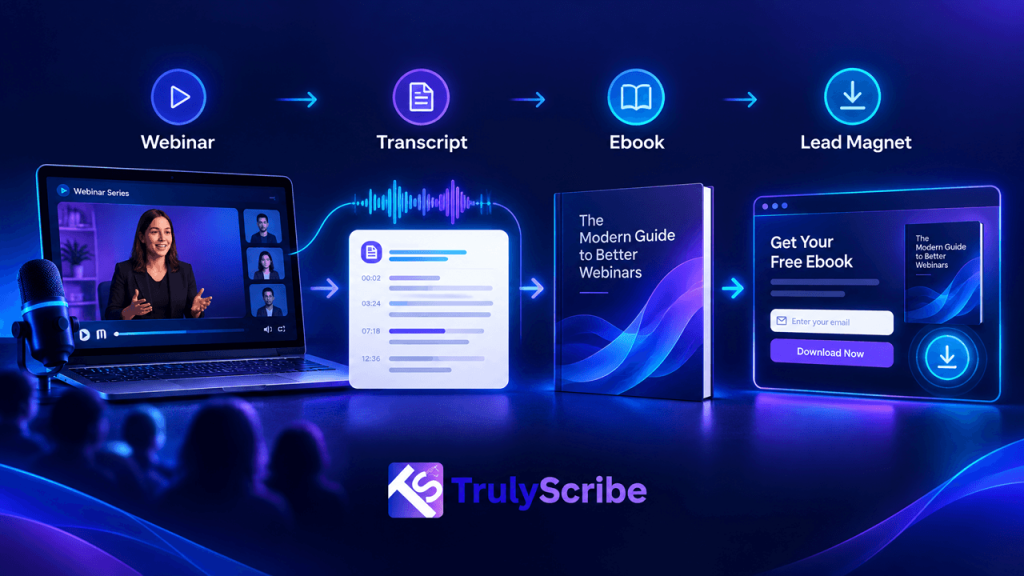
Why Coaches Struggle to Create Consistent Content Creating consistent, high-quality content is one of the biggest challenges for coaches today. Whether you’re a business coach, fitness coach, life coach, or online mentor, you’re expected to publish blogs, emails, social posts, and thought leadership content—while still delivering transformational coaching sessions to your clients. The good news?You’re already creating your best content every day—inside your coaching calls. With the right transcription workflow for coaches, you can turn live coaching sessions into a powerful content engine that builds authority, drives visibility, and generates qualified leads—without burnout. This guide explains how transcription for coaches works, why AI transcription for coaches is a game-changer, and how to turn coaching calls into content that consistently attracts clients. Why Transcription Is a Game-Changer for Coaches Coaching Calls Are a Goldmine of Authority Content Every coaching session is packed with: Yet most of this content disappears the moment the call ends. Transcription for coaching sessions captures these insights in text form, making them reusable, searchable, and scalable. Instead of asking, “What should I post today?”, you simply ask: “What did I coach on this week?” From One Coaching Call to Multiple Content Assets With AI transcription for coaches, a single session can be repurposed into: This is why content repurposing for coaches is one of the fastest ways to grow authority without spending extra hours creating content from scratch. Transcription Workflow for Coaches (Step-by-Step) A simple and repeatable transcription workflow for coaches ensures consistency and saves time. Step 1: Record Coaching Sessions (With Consent) Whether you run: Recording sessions (with client permission) allows you to capture authentic coaching conversations. Many online coaches already record sessions for client review—transcription simply adds another layer of value. Step 2: Use AI Transcription for Coaches Manually transcribing coaching calls is time-consuming and unrealistic. This is where automated transcription for coaches comes in. A good AI transcription tool for coaches should: AI transcription turns hours of audio into clean, readable text in minutes—making it practical to transcribe every session, not just occasional ones. Step 3: Organize Key Insights from Transcripts Once you have transcripts, scan them for: These insights form the backbone of your coaching content strategy. Step 4: Turn Transcripts into Content This is where transcription becomes a growth engine: You’re no longer “creating content.”You’re documenting your coaching expertise. How Coaches Repurpose Content Using Transcription Turn Coaching Calls into Blog Posts One of the easiest ways to build authority is blogging. Using transcription: This approach works exceptionally well for SEO and positions you as an expert who understands real-world challenges—not just theory. Create Social Media Content from Coaching Sessions Short-form content becomes effortless when you use transcription. From a single session, you can extract: This is how many coaches maintain a strong social presence without spending hours brainstorming content ideas. Build Email Newsletters from Transcripts Your email list is one of your most valuable assets. With transcription: This builds trust, consistency, and long-term engagement. Transcription for Online Coaching Businesses Scaling Content Without Burnout Online coaching often means: Transcription for online coaching ensures that increased workload doesn’t mean increased content stress. You coach once.The content gets reused everywhere. This is how successful coaches scale their visibility without sacrificing energy or authenticity. Improving Accessibility and Client Experience Transcripts also improve accessibility: This adds value to your coaching programs and enhances the overall client experience. Coaching Content Strategy Powered by Transcription Content Pillars Coaches Can Build from Transcripts Using transcription, coaches naturally create content around pillars such as: This ensures your content stays focused, relevant, and aligned with your coaching niche. Using Transcription to Build Thought Leadership Thought leadership isn’t about sounding polished—it’s about being real and insightful. Transcribed coaching conversations: This is why transcription is such a powerful tool for building long-term authority. Transcription Playbook for Coaches Weekly Content Playbook A simple transcription playbook for coaches might look like this: This creates consistent content without extra planning. Monthly Lead Generation Playbook Over a month, transcripts can be turned into: This is how coaches use transcription to grow their coaching business systematically. Best Transcription Tools for Online Coaches What Coaches Should Look for in a Transcription Tool When evaluating transcription tools for online coaches, look for: The goal is to spend time using the content—not fixing transcripts. Why TrulyScribe Works for Coaches TrulyScribe is designed for professionals who want more than just raw transcripts. For coaches, it helps: If you want automated transcription for coaches that fits seamlessly into your content strategy, TrulyScribe removes the friction between coaching and marketing. How to Use Transcription to Grow Your Coaching Business More Content = More Visibility Search engines, social platforms, and email audiences reward consistency.Transcription ensures you always have content ready—without creative fatigue More Trust = More Clients When prospects see your insights consistently: This is the real power of transcription for coaches—it turns everyday coaching into long-term business growth. FAQs: Transcription for Coaches What is the best transcription tool for coaches?A good tool like TrulyScribe, offers high accuracy, fast processing, and easy content reuse. AI-based platforms are ideal for coaches. How can coaches turn coaching calls into content?By transcribing sessions and repurposing key insights into blogs, social posts, emails, and lead magnets. Is AI transcription safe for coaching sessions?Yes, when using secure platforms and obtaining proper client consent. Can transcription help coaches get more clients?Absolutely. Consistent, authentic content builds authority and attracts qualified leads. Conclusion Your coaching calls already contain everything your audience wants to read, watch, and learn. With the right AI transcription for coaches, you can: Instead of creating content from scratch, start leveraging the conversations you’re already having. Turn every coaching call into high-impact content with TrulyScribe—and grow your coaching business without burnout.

YouTube Transcription: Boost SEO, Views & Accessibility
Video SEO & YouTube Marketing, AI & Automation in Media, Media Localization & Accessibility, Subtitling, Dubbing & Voice-Over

YouTube Transcription: How to Boost Views, SEO & Accessibility

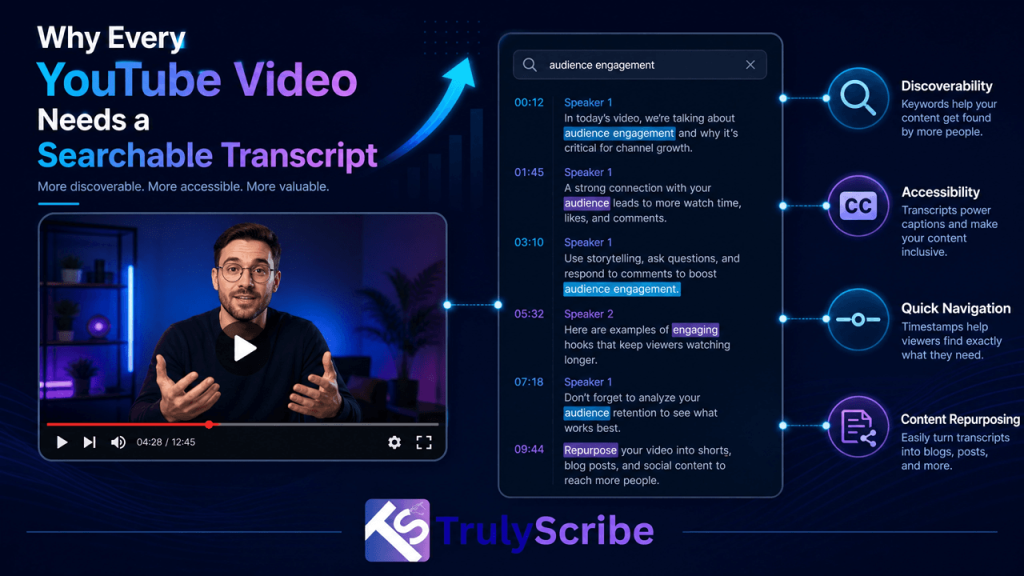
Introduction: Why YouTube Transcription Matters in 2026 YouTube is no longer just a video platform—it’s the second-largest search engine in the world and a primary discovery channel for brands, educators, media companies, and creators. With over 500 hours of video uploaded every minute, competition for attention is fierce. In this crowded ecosystem, simply uploading high-quality videos is not enough. This is where YouTube Transcription becomes a strategic advantage. Transcription transforms spoken content into searchable, indexable text that fuels YouTube SEO optimization, improves accessibility, enables subtitling and dubbing workflows, and helps creators reach global audiences. For YouTubers, MCNs, OTT platforms, localization agencies, and corporate media teams, transcription is now a core growth lever—not an optional add-on. In this guide, we’ll explore how transcription boosts views, SEO, and accessibility, how AI has changed the game, and how businesses can use transcription as the foundation for subtitling, localization, and global content distribution. How YouTube Transcription Improves Video SEO How does YouTube transcription improve video SEO? Search engines cannot truly “watch” videos—but they can read text. YouTube transcription provides the metadata and contextual signals that help algorithms understand what your video is about. When you add accurate transcripts to your videos, YouTube and Google can: Does transcription help YouTube videos rank higher? Yes. Multiple studies and creator case examples show that videos with accurate captions and transcripts often see: These are all strong ranking signals for YouTube’s algorithm. Why AI Transcription Is a Game Changer for YouTube Creators Manual transcription is time-consuming and expensive—especially for channels publishing content at scale. This is why AI transcription for YouTube videos has become the industry standard. Benefits of AI transcription for YouTube creators Modern AI transcription tools offer: For YouTubers, video editors, and post-production teams, this means faster publishing cycles and consistent SEO optimization without increasing overhead. Hypothetical example: A tech YouTube channel uploads 20 videos per month. By using AI transcription: The result: higher discoverability with minimal additional effort. YouTube Captioning and Subtitling for Better Engagement How to create subtitles for YouTube videos Subtitles and captions are one of the most underrated growth tools on YouTube. The typical workflow: YouTube captioning and subtitling help: According to industry data, videos with captions can see up to 12–15% higher watch time—a critical factor for YouTube ranking. For media companies and MCNs, standardized captioning workflows ensure brand consistency and compliance across hundreds of videos. Accessibility Is No Longer Optional How to make YouTube videos accessible for deaf audiences Accessibility is both a legal requirement and a brand responsibility in many regions, including North America, Europe, and Australia. YouTube accessibility solutions typically include: For: Accessibility compliance is increasingly non-negotiable. Real-world scenario: An online education platform serving learners across the UK and EU faced accessibility complaints. By implementing transcription-driven captioning: Transcription is the foundation of all accessibility workflows. Multilingual YouTube Localization for Global Growth How to localize YouTube videos for global audiences YouTube’s fastest growth markets include India, Southeast Asia, the Middle East, and Europe. Yet many channels still publish content in only one language. Multilingual YouTube localization starts with transcription. Once a transcript exists, it can be: For localization agencies, dubbing studios, and OTT platforms, transcription reduces turnaround time and improves translation accuracy. Example: A brand channel localizes its English YouTube videos into Arabic, Hindi, and Spanish. By doing so, it: Using Transcripts Beyond YouTube Repurposing transcripts for maximum ROI Transcription is not just for YouTube—it fuels your entire content ecosystem. Using transcripts, teams can: This is especially valuable for: A single transcript can power 10+ content assets across channels. Choosing the Best Tool to Transcribe and Subtitle YouTube Videos What to look for When evaluating the best tool to transcribe and subtitle YouTube videos, consider: For professional use, AI transcription should be paired with human review and localization expertise—especially for branded, educational, or regulated content. Why Transcription Matters for Media, OTT & Corporate Teams For enterprises and media organizations, YouTube transcription supports: Media operations managers and localization project leads increasingly see transcription as infrastructure, not just a feature. Conclusion: Transcription Is the Foundation of YouTube Growth In 2026, YouTube Transcription is no longer optional—it’s essential. It drives: Whether you’re a YouTuber, an MCN, a media company, an e-learning provider, or a localization agency, transcription is the starting point for sustainable growth. Call to Action If you’re looking to transcribe, subtitle, dub, localize, or add audio description to your YouTube content, our team can help. We work with YouTube creators, media companies, dubbing and voice-over studios, localization agencies, OTT platforms, and global brands to deliver accurate, scalable, and compliant content solutions. Contact us today to transform your YouTube videos into accessible, searchable, and globally ready assets.

Podcast SEO Guide 2026
Podcasting & Audio Production, AI Tools & Automation, Media Localization, SEO & Content Marketing, Subtitling & Captioning

The Complete Guide to Podcast SEO: Why Transcription Is the #1 Growth Hack in 2026

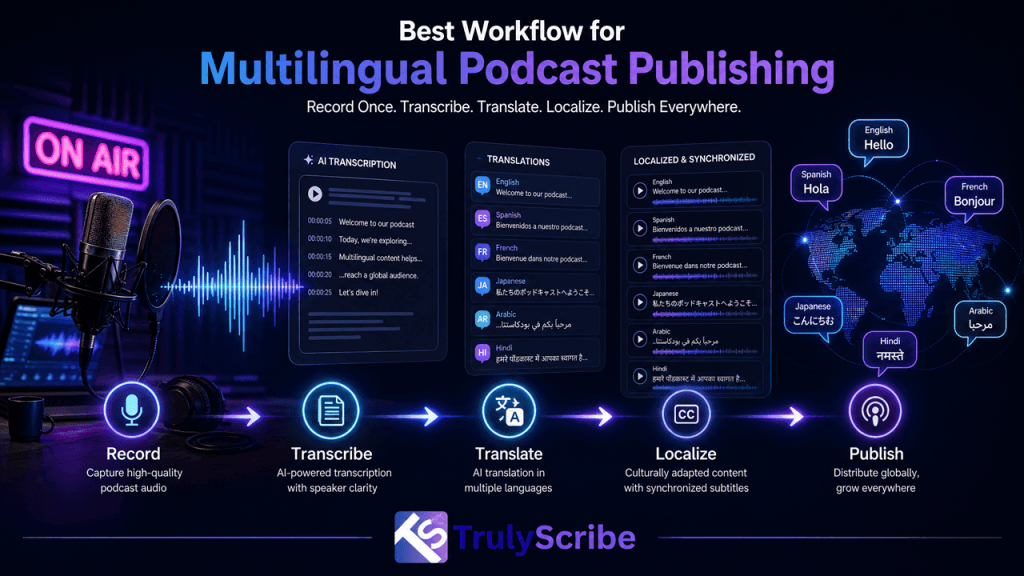
Podcasting has exploded across every major market — from North America and Europe to India, the Middle East, and Southeast Asia. As more creators, brands, media companies, and enterprises enter the space, competition for visibility has become intense. It’s no longer enough to publish great audio; you need a strategy that ensures your episodes are discoverable on Google, YouTube, Spotify, and across multilingual markets. That’s where Podcast Transcription becomes the single most powerful, cost-effective, and scalable growth hack in 2026. For podcasters, dubbing and voice-over studios, localization agencies, OTT platforms, and media companies, transcription is no longer a nice-to-have — it’s a core SEO and accessibility requirement. With AI transcription tools becoming dramatically more accurate, faster, and more affordable, brands are using them to unlock new keywords, global audiences, and content formats. This guide explains why transcription is central to Podcast SEO optimization, how it improves discoverability, and how audio/video teams can leverage it to localize content, repurpose episodes, and grow their audience at scale. Why Podcast SEO Matters More Than Ever in 2026 Podcast consumption is shifting from “audio-only entertainment” to “searchable, multi-format content.” Google’s algorithms have become smarter at indexing multimedia — but audio still needs text to be searchable. Here’s why SEO has become critical for podcast creators and media companies: In 2026, every successful podcaster is treating their content as a content ecosystem, not just an audio file. Why Podcast Transcription Is the #1 SEO Growth Hack Podcast Transcription turns your audio into a keyword-rich asset — allowing Google to crawl, index, and rank your content. Below are the core reasons transcription has become essential: 1. Transcription Makes Your Podcast Discoverable on Google How does podcast transcription improve SEO?Simple: search engines cannot “listen” to audio, but they can index text. A 40-minute episode often contains thousands of keywords, phrases, questions, and topics that you’re not currently ranking for. Once transcribed, these become searchable content that helps: Example: A marketing podcast discussing “AI in customer service” might organically rank for: Without transcription, these keywords are wasted. 2. AI Transcription for Podcasts Saves Time & Boosts Accuracy Manual transcription is slow and expensive.  But AI transcription for podcasts now offers: This allows podcast producers, digital marketers, localization teams, and media companies to scale SEO faster and more affordably than ever. 3. Transcripts Enable Easy Content Repurposing How to repurpose podcast transcripts for content marketing? One transcript can generate: Podcasters and agencies can multiply reach without additional recording or writing. 4. Transcription Enables Podcast Subtitling and Captioning More podcasts are becoming video podcasts for YouTube, Instagram, Reels, TikTok, and OTT platforms. How to create subtitles for podcast videos? Transcription → Captioning → SEO-optimized video content. Subtitles improve: This is also crucial for media companies, dubbing studios, and OTT platforms delivering multilingual podcast localization. 5. Accessibility Compliance Is Now a Global Requirement Governments and platforms are enforcing accessibility standards similar to WCAG and ADA guidelines. Podcast accessibility solutions now require: This matters significantly for: Transcription is the first step to full accessibility support. How Transcription Helps You Reach Global Audiences Multilingual markets are a massive growth opportunity. With regions like Europe, UAE, India, Southeast Asia, and LATAM consuming more podcasts, creators need language-ready workflows. Transcripts enable multilingual podcast localization by: Without transcripts, dubbing and subtitling workflows become slower, more expensive, and less accurate. How Podcast Producers and Media Teams Can Use Transcripts in 2026 Here’s a simple yet powerful workflow used by leading media & entertainment brands, OTT platforms, and podcast production companies: Step 1 — Transcribe Every Episode Using an AI Tool Look for the best tool to transcribe and localize podcasts, offering: Step 2 — Use Transcripts to Create On-Page SEO Content You can generate: Step 3 — Add Subtitles & Captions to Video Podcasts Convert transcripts into SRT/VTT to boost YouTube, IG Reels, and LinkedIn visibility. Step 4 — Localize Content for Global Audiences Translate transcripts into Arabic, German, French, Spanish, Hindi, Japanese, Korean and 50+ more languages. This is perfect for localization companies, voice-over studios, dubbing workflows, OTT publishers, and multinational brands. Step 5 — Archive Transcripts for Compliance & Content Retrieval Large enterprises and educational platforms store transcripts for: Transcripts become a long-term content asset. Real-World Scenario: How a Media Company Boosted Visibility by 300% A leading OTT network in the Middle East (UAE) launched a multilingual podcast series but struggled with SEO and discoverability. They implemented a transcription-first workflow: The result: This is the power of transcription-enabled SEO and localization. Final Thoughts: Transcription Is the Future of Podcast SEO In 2026, Podcast Transcription has become the backbone of: Whether you’re a podcaster, a dubbing studio, a localization agency, an OTT platform, or a corporate communicator — your podcast growth strategy starts with transcription. Call-to-Action If you’re looking to transcribe, localize, dub, caption, subtitle, or provide audio description for your podcast or media content, our team can help. We specialize in serving podcasters, production houses, media companies, dubbing studios, localization teams, and global enterprises across every major industry and region. Contact us today to scale your podcast reach with professional transcription, subtitling, dubbing, and localization services.

Scroll to Top