Trulyscribe

Transcription

Transcription Tips for Short-Form Video
Video Transcription, Accessibility & Compliance, AI & Automation in Media, AI Transcription Tools, Media Localization & Accessibility, Subtitling & Captioning, Transcription, Video Localization

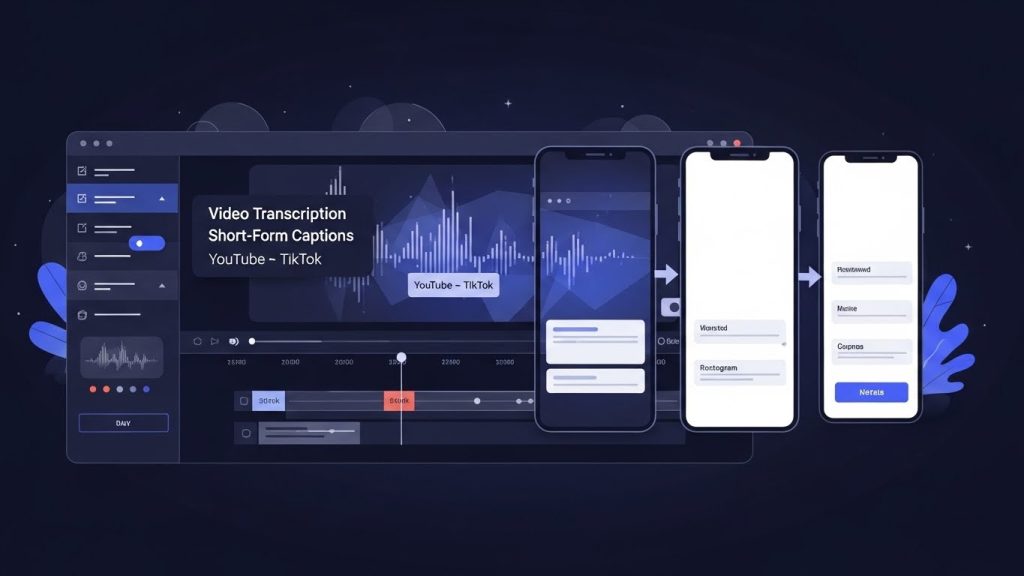
From YouTube to TikTok: Transcription Tips for Short-Form Video Success

Why Video Transcription Is Essential for Short-Form Video Success Long-form video is no longer the end of the content journey—it’s just the beginning. Today’s most successful creators, media companies, and brands are repurposing YouTube videos into short, high-impact clips for TikTok, Instagram Reels, and YouTube Shorts. At the heart of this transformation lies one critical enabler: video transcription. Whether you’re a content creator, a localization project manager, or a post-production supervisor, transcription is the foundation for effective short-form video captions, accessibility, and global reach. In this guide, we’ll explore how to move seamlessly from YouTube to TikTok using smart transcription workflows, AI-powered subtitling, and platform-specific best practices. Why Video Transcription Is the Backbone of Short-Form Video Short-form video platforms are built for speed, silent viewing, and global audiences. According to multiple industry studies, over 80% of social media videos are watched without sound, and videos with captions consistently outperform those without. This makes video transcription essential—not optional. Key benefits of transcription for short-form video: For industries like media & entertainment, e-learning, broadcasting, and corporate communications, transcription also supports compliance, scalability, and faster turnaround times. From YouTube to TikTok: Why Transcription Comes First Repurposing long-form YouTube videos into short clips isn’t just about trimming footage. TikTok, Reels, and Shorts demand a different storytelling rhythm—faster hooks, tighter captions, and visual-first communication. This is where YouTube to TikTok transcription plays a crucial role. How to transcribe YouTube videos for TikTok captions Instead of manually rewatching hours of footage, professional teams and creators follow this workflow: This approach allows video editors, social media managers, and localization teams to work faster and more accurately—especially when handling large content volumes. Best Transcription Format for Short-Form Social Videos Not all transcripts are created equal. A verbatim transcript that works for YouTube may not work for TikTok. Best transcription format for short-form social videos: For subtitling specialists and dubbing producers, this clean transcript also becomes the base file for: Subtitle Timing Tips for Vertical Short-Form Videos Timing matters more than text volume on short-form platforms. Captions that lag—or overload the screen—can kill engagement. Subtitle timing tips for vertical short-form videos: For video production studios and post-production teams, these subtitling standards ensure platform compliance while maintaining creative integrity. How Captions Improve Engagement on Short Videos Captions don’t just improve accessibility—they drive performance. How captions improve engagement on short videos: For digital marketing and performance marketing agencies, captioned videos often result in: This is why short-form video captions are now a non-negotiable part of social media strategy. AI Transcription for TikTok and Instagram Reels: What to Know AI has transformed transcription speed and scalability. AI transcription for TikTok and Instagram Reels allows teams to process large content libraries quickly—but quality control remains critical. Where AI subtitle generation works best: Where professional review is essential: Localization project managers and media localization managers often combine AI with human review to balance speed, accuracy, and cultural nuance. Multilingual Subtitles for Short-Form Video Content Short-form video is global by default. A TikTok posted today can reach audiences in Europe, Asia, the Middle East, and Latin America within hours. Why multilingual subtitles matter: For video localization services, transcription is the starting point for: This is especially critical in multilingual and localization-heavy regions such as Latin America, Western & Eastern Europe, Africa, and Southeast Asia. Transcription Workflow for Repurposing Long Videos A scalable transcription workflow benefits creators and enterprises alike. A proven transcription workflow for repurposing long videos: This workflow is widely used across: Real-World Scenario: One Video, Multiple Markets Imagine a YouTube interview published by a media brand in the United States. Using transcription: With one source video, the brand reaches audiences in North America, Latin America, Europe, and the Middle East—without re-recording or re-editing from scratch. That’s the power of transcription-led content strategy. Conclusion: Transcription Is the Smartest Way to Win Short-Form Video Short-form video success isn’t just about trends or algorithms—it’s about clarity, accessibility, and speed. Video transcription enables creators, marketers, and media teams to repurpose content efficiently, improve engagement, and scale globally. Whether you’re producing TikToks, managing localization projects, or delivering accessible content, transcription is the foundation that makes everything else possible. Ready to elevate your short-form video strategy? Our team provides professional transcription, subtitling, dubbing, voice-over, video localization, and audio description services tailored for creators, media companies, and global brands. 👉 Contact us today to transform your long-form content into high-performing, globally accessible short-form videos. Frequently Asked Questions (FAQs)


AI Accessibility and Globalization
Transcription

Top AI Transcription Trends 2025

Introduction Transcription has evolved from manual typing to sophisticated AI-driven workflows that deliver automated transcription at scale. In 2025, three forces—AI, accessibility, and globalization—are converging to redefine how organizations capture, process, and leverage spoken content. Whether you’re a Content & SEO Manager boosting search rankings, an Accessibility Coordinator ensuring compliance, or an IT Director vetting enterprise‑grade platforms, these trends offer actionable insights to help you stay ahead. The AI‑Powered Revolution in Transcription Market Growth Projections Real‑Time Transcription Takes Center Stage Globalization and Multilingual Reach Outsourcing & Language Services Boom Cloud‑Based Multilingual Transcription Platforms Accessibility as a Core Requirement Regulatory Compliance Driving Accessibility AI for Enhanced Accessibility Security, Privacy, and Compliance Healthcare & HIPAA Legal & Data Protection Niche Specializations and Vertical Solutions AI transcription for accessibility compliance Tailored solutions ensure videos meet ADA/GDPR standards while improving UX. Secure AI transcription for healthcare documentation HIPAA‑eligible platforms reduce admin burden and improve accuracy. SEO‑friendly podcast transcription services Detailed show notes and transcripts boost discoverability and SEO rankings for content creators. Enterprise‑grade transcription for multinational teams Scalable APIs support hundreds of languages and dialects, enabling global knowledge management. Conclusion The convergence of AI, accessibility, and globalization is driving the transcription market into a new era of growth and specialization. By 2025, organizations that adopt AI-powered real-time transcription services, leverage cloud-based multilingual platforms, and uphold strict accessibility and security standards will gain a competitive edge. Ready to transform your content workflows with professional dubbing, voice‑over, subtitling, or audio description? Contact us today to discuss tailored solutions that meet your industry’s needs and compliance requirements.

Transcription Services
Transcription

How AI is Revolutionizing Transcription Services

In today’s fast-paced digital age, transcription services have become a cornerstone for industries ranging from media and education to legal and healthcare. Historically, transcription was a labor-intensive process requiring skilled professionals to listen and manually convert spoken words into text. While effective, this method was time-consuming, prone to human error, and limited in scalability. Enter artificial intelligence (AI) – a game-changing technology that is transforming transcription services as we know them. Speed: Lightning-Fast Transcriptions One of the most significant advantages of AI-powered transcription is its unparalleled speed. Traditional transcriptionists can take several hours to transcribe a single hour of audio, depending on the complexity of the content. AI transcription platforms, on the other hand, can process the same audio within minutes. AI achieves this through advanced speech recognition algorithms capable of analyzing audio data in real time. This rapid turnaround is particularly beneficial for industries where time is of the essence, such as journalism and live event coverage. With AI, businesses can meet tight deadlines and ensure timely delivery of content. Accuracy: Reducing Human Error Accuracy is paramount in transcription, especially in fields like legal proceedings or medical documentation, where errors can have serious consequences. While human transcriptionists can achieve high levels of accuracy, they are not immune to fatigue, distractions, or misinterpretations. AI transcription platforms leverage machine learning models trained on vast datasets of diverse accents, dialects, and languages. This training allows AI systems to achieve remarkable levels of accuracy, often rivaling or even surpassing human performance. Additionally, many platforms offer features like speaker identification and context-based correction, further enhancing precision. Scalability: Meeting Growing Demands Manual transcription services face inherent limitations in scalability. Hiring, training, and managing a team of skilled transcriptionists can be costly and time-consuming. This bottleneck becomes even more pronounced when dealing with large volumes of audio or video content. AI transcription eliminates these challenges by offering a scalable solution. Whether a business needs to transcribe a single interview or thousands of hours of video content, AI can handle the workload seamlessly. This scalability makes AI transcription an ideal choice for enterprises, educational institutions, and media companies looking to streamline their operations. Additional Benefits Beyond speed, accuracy, and scalability, AI transcription platforms offer several other advantages: Overcoming Challenges While AI transcription has made significant strides, it is not without its challenges. Background noise, overlapping speech, and heavy accents can still pose difficulties for AI systems. However, continuous advancements in machine learning and audio processing are addressing these issues, further improving performance over time. Conclusion AI is undeniably revolutionizing the transcription industry, offering unmatched speed, accuracy, and scalability. By automating repetitive tasks, it frees up human professionals to focus on higher-value activities, such as editing and analysis. As technology continues to evolve, the possibilities for AI transcription are limitless, promising a future where converting spoken words into text is faster, more accurate, and more accessible than ever before. Businesses and organizations that embrace AI-powered transcription will undoubtedly gain a competitive edge, enabling them to keep pace in an increasingly digital and data-driven world.

Scroll to Top