
Online learning has exploded in the past few years. From independent course creators to universities and corporate training teams, digital education is now mainstream. But while most creators focus on video quality, content depth, and platform features, one critical element is often overlooked:
Online course transcripts.
Transcripts are no longer optional add-ons. They are essential for accessibility, compliance, SEO, and learner success. Whether you’re running a small course on a creator platform or managing large-scale eLearning programs, transcripts play a vital role in long-term growth.
Let’s break down why every online course needs transcripts for accessibility and SEO in 2026.
What Are Online Course Transcripts?
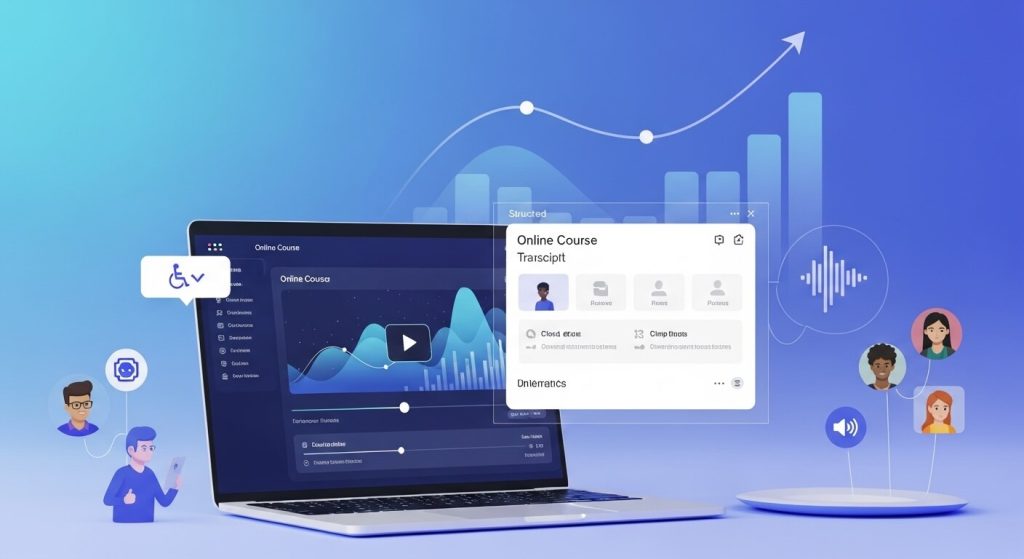
Online course transcripts are text versions of spoken content in course videos, lectures, webinars, or training sessions. Unlike captions that appear on screen, transcripts provide a full written record of the lesson in a structured, readable format.
They are commonly created using:
- Course transcription services
- AI transcription for online courses
- Automated transcription software for educators
When properly formatted, transcripts become powerful learning and search assets.
Online Course Accessibility: Why Transcripts Are Essential
1. Supporting Students with Hearing Impairments
Accessibility for online courses is not just a best practice—it’s often a legal requirement.
Transcripts help:
- Students who are deaf or hard of hearing
- Non-native English speakers
- Learners who prefer reading over listening
Many creators ask:
Do online courses need transcripts for accessibility?
If you want your course to be inclusive and compliant, the answer is yes.
2. ADA Compliance for Online Courses
In many regions, including the United States, ADA compliance for online courses requires accessible learning materials. While captions are essential, transcripts provide an additional level of accessibility and usability.
Institutions and course platforms increasingly require:
- Text alternatives for audio/video
- Structured content accessibility
- Clear documentation of accessible materials
Failing to provide transcripts can create legal risks and limit audience reach.
3. Supporting Different Learning Styles
Not all students learn best through video.
Some prefer:
- Reading at their own pace
- Skimming content quickly
- Reviewing specific sections
Transcripts allow learners to:
- Search for key terms
- Highlight important sections
- Copy notes efficiently
This improves comprehension and retention significantly.
How Transcripts Improve SEO for Online Courses
Most course creators don’t realize this:
Search engines cannot “watch” your videos.
Without transcripts, your course content is largely invisible to Google.
1. Making Course Content Indexable
Adding video transcripts for courses allows search engines to:
- Understand your lesson topics
- Index keywords naturally
- Rank your course pages for relevant queries
This directly answers a common question:
How do transcripts improve SEO for online courses?
They turn spoken content into searchable, crawlable text.
2. Ranking for Long-Tail Keywords
When you publish transcripts on:
- Course landing pages
- Blog companion posts
- Resource pages
You naturally rank for long-tail phrases students are searching for.
For example:
- “Beginner digital marketing strategies”
- “How to structure a business proposal”
- “Python loops explained simply”
Transcripts capture organic phrasing you may not intentionally optimize for.
3. Increasing Organic Traffic
Transcripts increase organic visibility by:
- Expanding keyword coverage
- Improving time-on-page
- Enhancing topical authority
Over time, this can significantly improve SEO for online courses and bring in students outside your learning platform.
Transcripts vs Captions for Online Courses
Many course creators confuse the two.
Captions
- Appear synced with video
- Help viewers follow along in real-time
- Required for accessibility compliance
Transcripts
- Provide full text versions of lessons
- Allow searching, skimming, and repurposing
- Improve SEO performance
Both are important—but transcripts offer additional benefits beyond on-screen captions.
Benefits of Transcripts for eLearning
Here are the core advantages of eLearning transcription:
Improved Accessibility
Making online courses accessible with transcripts ensures equal access for all learners.
Better Student Experience
Students can:
- Review lessons quickly
- Study more efficiently
- Revisit complex sections
Content Repurposing
Transcripts can be turned into:
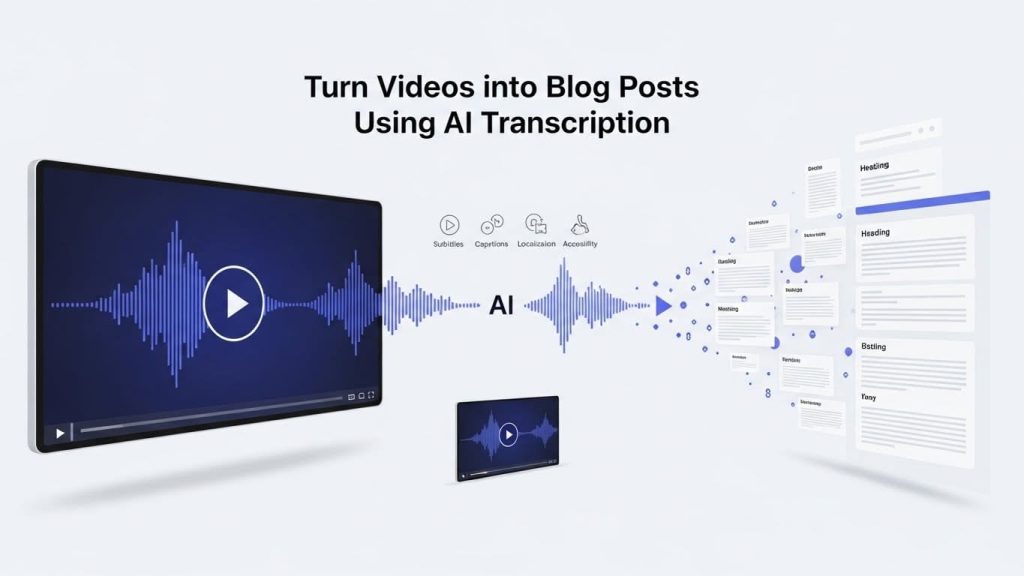
- Blog posts
- Course summaries
- Study guides
- Email lessons
- Lead magnets
Scalability
Using AI transcription for online courses, creators can scale content production without hiring manual transcriptionists.
How to Add Transcripts to Online Courses
If you’re wondering how to add transcripts to online courses, here’s a simple workflow:
- Upload your course video to a transcription tool.
- Use AI-powered transcription software for course creators.
- Review and lightly edit the transcript.
- Export in PDF, DOC, or HTML format.
- Add the transcript below the video or as a downloadable resource.
Using automated tools dramatically reduces turnaround time compared to manual transcription.
Choosing the Best Transcription Service for Course Creators
When selecting a transcription solution, look for:
- High AI transcription accuracy
- Fast turnaround
- Affordable pricing
- Easy editing tools
- Clean export options
The best transcription service for course creators should integrate seamlessly into your workflow without adding friction.
Tools like TrulyScribe are built to support educators and course creators with fast, accurate, and scalable transcription solutions.
Are Transcripts Required for Online Course Compliance?
While legal requirements vary by region, many platforms and institutions strongly recommend transcripts as part of accessibility compliance.
Even if not legally mandated in every case, transcripts:
- Protect you from potential accessibility complaints
- Expand your audience
- Improve learning outcomes
From both ethical and business perspectives, transcripts are a smart investment.
The Future of Online Course Accessibility and SEO
As online learning grows, expectations around accessibility and discoverability will increase.
Search engines are becoming smarter, but they still rely on text to understand content. At the same time, accessibility standards are tightening across education and corporate training.
Creators who invest in online course transcripts today will:
- Reach wider audiences
- Rank higher in search results
- Build inclusive learning environments
- Future-proof their educational content
Final Thoughts
If you’re creating online courses in 2026, transcripts are not optional—they’re foundational.
They support accessibility, improve SEO, enhance learner experience, and unlock content repurposing opportunities.
Whether you’re a solo course creator or managing enterprise-level training, investing in course transcription services ensures your content is inclusive, discoverable, and future-ready.
And with modern AI-powered tools, adding transcripts to your courses has never been easier.
FAQs – Online Course Transcripts
Why are transcripts important for online courses?
Transcripts make online courses accessible to deaf and hard-of-hearing learners while also making video content searchable for search engines.
Do transcripts improve SEO for course creators?
Yes. Transcripts add keyword-rich text to your pages, helping search engines index your video content and rank it for relevant queries.
What’s the difference between captions and transcripts?
Captions are time-synced text displayed during playback, while transcripts are full text versions of the spoken content that can be downloaded or read separately.
Are transcripts required for accessibility compliance?
In many regions, accessibility standards (such as WCAG) recommend transcripts for video content to ensure inclusive learning experiences.
Can AI transcription tools create accurate course transcripts?
Yes. Modern AI transcription tools can generate highly accurate transcripts quickly, which can then be edited for 99%+ accuracy.
Where should I place transcripts in my course?
Transcripts can be embedded below videos, offered as downloadable PDFs, or structured as SEO-optimized blog content to drive organic traffic.